
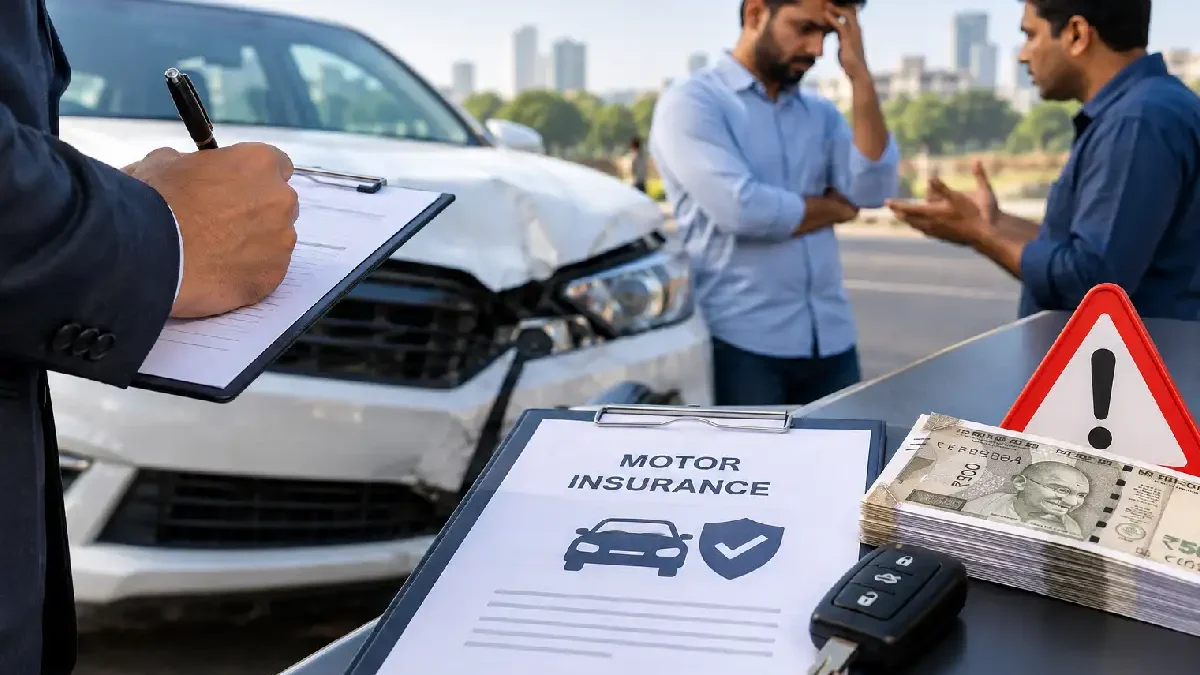

How do you confirm that an insurance agent selling you a suspiciously cheap policy is actually legitimate? You are right to be cautious. Motor insurance fraud is a real and growing problem in India. It ranges from agents pocketing your premium without ever issuing real cover, to organised gangs staging fake accidents for payouts.
These schemes do not just hurt insurers financially. They leave policyholders holding worthless paperwork exactly when they need coverage most. IRDAI has introduced stricter fraud monitoring guidelines to address the scale of the problem.
This article explains the most common frauds and how to protect yourself from becoming a target.
Table of Contents
Fake and Counterfeit Policies
The fraudulent act involves documents that look entirely legitimate but carry no real coverage behind them. Fraudulent agents sometimes issue counterfeit policy papers, collect the premium, and vanish. Policyholders realise the problem at the worst possible moment, during an actual claim or a roadside check, when the policy turns out not to exist in the insurer’s system at all. Victims are often left both without valid driver and passenger cover and without any way to recover the money already paid.
Premium Theft by Agents
A close cousin of the fake policy scheme, this fraud involves a genuine-looking agent who collects your premium in cash or through a personal account and simply never books the policy with the insurer. Because the transaction feels completely normal at the time, victims often only discover the fraud months later. Paying only through official channels, and confirming the policy appears on the insurer’s own portal, closes this gap almost entirely. Even agents who genuinely represent an insurer have occasionally been caught running this kind of scheme on the side.
Staged Accidents and Inflated Repair Bills
Organized fraud rings sometimes work with dishonest garages to manufacture accidents or exaggerate genuine damage well beyond its actual cost. This form of fraud is harder for individual owners to spot, since it usually happens on the other side of a claim rather than to the policyholder directly. It still affects everyone indirectly, since these fraudulent payouts push up claim costs and, eventually, premiums across the entire market. Insurers now use investigators and pattern analysis to flag repeat garages or unusually similar accident stories.
Wrong Vehicle Details to Lower Premiums
Some frauds involve deliberately incorrect information entered at the point of sale to shrink the quoted premium artificially.
- Registering a car under a cheaper category of vehicle for quoting lesser premium.
- Making two wheeler documents and selling them as four wheeler covers.
- Understating the size of the engine or the use of the vehicle to lower the premium.
- Leaving out required details that later give the insurer grounds to reject a genuine claim.
How IRDAI Is Tightening the Rules
Regulators have taken notice of how widespread these schemes have become. IRDAI has now come up with a more stringent framework for monitoring fraud with insurers required to take a zero tolerance approach. They also created internal units to track suspicious behavior. Insurers must become more proactive in reporting fraud patterns and have policies addressing this risk. It ensures more verification steps during purchase and claims for policyholders. While it may feel like extra friction but can actually reduce the chances of fraud.
Double Claims and Fabricated Losses
A smaller but persistent category of fraud involves policyholders filing the same claim with more than one insurer, or reporting a loss that never actually happened. This is treated as a criminal offence when detected, not simply a rejected claim, and insurers increasingly cross-check claims through shared databases to catch it. Genuine claimants have nothing to worry about here, but it helps to know this scrutiny exists and can occasionally slow down legitimate claims too. The industry’s growing use of shared fraud registries means this kind of scheme is far riskier to attempt today than it was even a few years ago.
How to Verify a Policy Is Genuine
A little verification before and after purchase closes most of these gaps entirely, and none of these steps takes more than a few minutes.
- Buy car insurance online directly through the insurer’s official website or app whenever possible.
- Confirm your policy number appears correctly on the insurer’s own portal.
- Cross-check your vehicle’s insurance status through the Parivahan portal.
- Never pay premiums in cash or to a personal UPI handle.
- Read your policy document fully, including whether Driver and passenger cover is actually included as promised.
What to Do If You Suspect Fraud
If something feels off about a policy or an agent’s behaviour, report it to the insurer’s anti-fraud cell and to IRDAI directly. Acting early gives you a far better chance of recovering your money and protects other buyers from the same scheme. Driving with a fake or invalid policy also carries its own legal risk, no matter who sold it to you. So make sure to resolve any doubts quickly for your own protection too. Keep screenshots, receipts, and any messages from the agent. This could be important evidence if the case needs to be escalated formally.
Final Thoughts
Motor insurance fraud thrives on shortcuts, cash payments, unofficial agents, and policies that never get checked until it is too late. Buying directly through verified channels and confirming your cover actually exists removes most of the risk in one step. A few extra minutes of verification when you buy or renew is a small price for the protection a genuine policy is meant to provide, and it saves considerable stress if you ever need to file a real claim.